

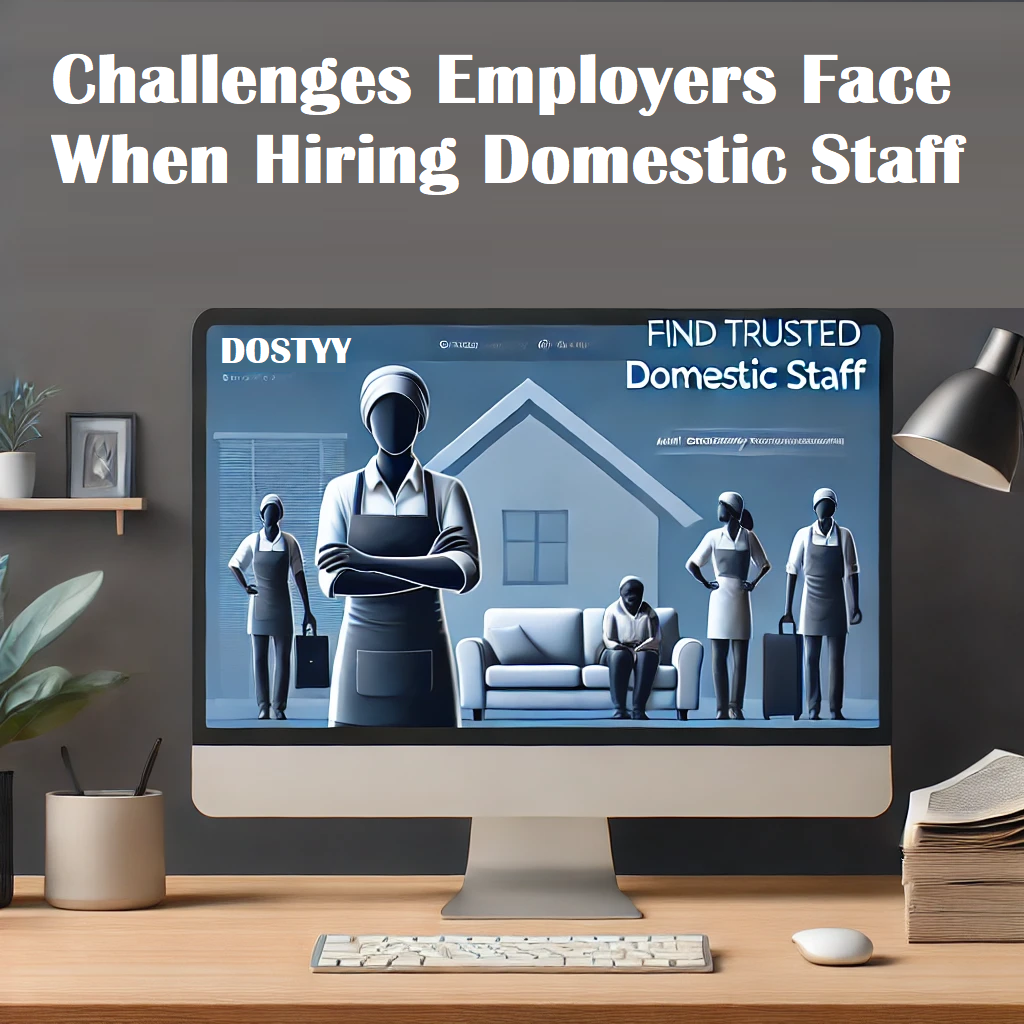
Challenges Employers Face When Hiring Domestic Staff
- Jan 31, 2025
- 0
Domestic workers include housemaids, cooks, drivers, and caregivers. These workers are often essential for managing daily household responsibilities. However, finding reliable, skilled, and trustworthy domestic staff is not an easy task. Many employers face challenges related to trust, background verification, worker retention, communication, and legal compliance. This article highlights the most common problems employers encounter when hiring domestic staff and explains how these challenges can be managed effectively.
Many of these hiring difficulties become more serious when families move to newly developed housing areas. Employers living in modern residential societies often struggle with limited worker availability, lack of local references, and increased trust concerns. You can read more about these location-based challenges in our detailed guide on why hiring domestic staff is difficult in new societies , which explains practical hiring solutions for employers in Pakistan.
1. Trust and Background Verification
Trust is one of the biggest concerns for homeowners. Domestic workers are given access to private living spaces, valuable belongings, and sometimes sensitive personal information. Ensuring that the hired worker is honest, reliable, and free from any criminal background is a major challenge for employers.
Solution: Employers should prioritize hiring pre-screened domestic workers through authentic platforms such as Dostyy, which provides access to 4000+ verified domestic staff profiles in Lahore . In addition, police verification, reference checks from previous employers, and face-to-face interviews help reduce risks and build confidence.
2. Lack of Skilled and Trained Workers
Many domestic workers do not receive formal training in housekeeping, childcare, cooking, or elderly care. This lack of training can result in inefficiency, mistakes, and safety concerns, especially in households with children or elderly family members.
Solution: Employers should prefer trained domestic workers from recognized training centers whenever possible. Providing basic on-the-job training and clear guidance also helps workers adapt to household expectations and improve overall performance.
3. High Turnover Rate
High turnover is a common issue in domestic employment. Many workers leave without prior notice, causing inconvenience and disrupting household routines. Frequent rehiring also increases time and effort for employers.
Solution: Offering fair wages, timely payments, and respectful treatment encourages long-term commitment. Clear communication and written agreements outlining job responsibilities, working hours, and notice periods can significantly reduce sudden resignations.
4. Communication Barriers
Language and cultural differences often create communication gaps between employers and domestic workers. Misunderstandings regarding tasks, schedules, or expectations can affect work quality and cause frustration on both sides.
Solution: Employers should explain daily responsibilities clearly using simple language. Regular feedback, routine discussions, and visual instructions where necessary can help improve understanding and workplace harmony.
5. Legal and Compliance Issues
Many employers are unaware of labor laws related to domestic workers. Issues such as wages, working hours, leave policies, and termination procedures can lead to legal complications if not handled properly.
Solution: Employers should familiarize themselves with local labor regulations governing domestic employment. Maintaining proper documentation, including a written employment contract, helps protect the rights of both employers and workers.
6. Finding the Right Fit
Every household has unique needs, work routines, and cultural values. Finding a domestic worker who fits well into the family environment and meets job expectations can be challenging.
Solution: Clearly defining job roles, responsibilities, and expectations before hiring helps avoid future issues. Trial periods are also effective in assessing compatibility before making long-term commitments.
Conclusion
Hiring domestic staff is a necessary but often challenging process for households in Pakistan. With proper verification, fair compensation, clear communication, and the use of trusted platforms like Dostyy, employers can simplify the hiring process and find a reliable domestic worker who meets their household needs. Proactive hiring practices ensure security, stability, and long-term satisfaction for both employers and employees.
0 Comments
Add your review
Explore related articles

If you've ever waited in line at a busy food street in Gulberg or watched a shawarma roll come toge...

dostyy
If you're a web developer or graphic designer in Pakistan, you already know the problem: your skills ...
dostyy

If you're looking for domestic staff work in Lahore, two fres...